
The best way to plan a first birthday party is to start with your child’s routine, your guest list, and your budget before choosing decorations or a theme. A one-year-old does not need an elaborate event. A comfortable setting, familiar people, simple food, a birthday cake, and time for photographs can create a meaningful celebration without making the day exhausting for parents or children.
If you are wondering how to plan a 1st birthday party, work through the decisions in order: decide how many people you want, choose where the party will be held, set a spending limit, select a theme if you want one, send invitations, arrange food and cake, and prepare a simple schedule around your child’s nap and meal times.
1. Decide What You Want From the Celebration
Before making a shopping list, think about what would make the birthday meaningful for your family.
Some parents want a small gathering with grandparents and close relatives. Others want to celebrate with friends, neighbors, and families with young children. Neither approach is better. The right choice depends on your child’s personality, your home, your budget, and how much preparation you can realistically handle.
A useful starting point is to decide which of these sounds closest to what you want:
- A quiet family celebration
- A small party at home
- A backyard birthday
- A restaurant or café gathering
- A larger party at a rented venue
- A simple outdoor celebration
- A themed birthday with family and friends
Keep the child’s age in mind. A first birthday is primarily a celebration for the adults who have shared the child’s first year. The baby may enjoy the attention, cake, music, and people, but they do not need a packed schedule of activities.
2. Set Your Budget Before You Shop
It is easy to spend more than expected on a first birthday because there are so many tempting details: custom cakes, decorations, outfits, photography, party favors, entertainment, and personalized items.
Set your maximum budget first and divide it into categories.
| Party expense | What to consider |
| Food | Main meal, snacks, desserts, and drinks |
| Cake | Main cake, smash cake, or both |
| Venue | Home, outdoor space, restaurant, or rental |
| Decorations | Balloons, banner, table décor, backdrop |
| Invitations | Digital or printed |
| Photography | Professional or family member |
| Entertainment | Activities, music, or play equipment |
| Outfit | Birthday clothes and backup outfit |
| Party favors | Optional gifts for guests |
| Extras | Serving supplies, delivery, candles, and cleanup |
If your budget is limited, spend first on things that affect the experience: food, cake, seating, and a comfortable space.
Decorations can be simplified. You might use a few balloons, a birthday banner, and one decorated table instead of purchasing enough décor to fill every corner of the room.
Leave room for unexpected expenses
Avoid using your entire budget on planned purchases.
You may need extra food if more people attend than expected, replace a broken decoration, purchase additional serving supplies, or pay an unexpected delivery fee. Keeping a small amount aside makes the final few days much easier.
3. Create a Guest List That Fits Your Situation
The guest list is one of the most important decisions because it affects the venue, food, seating, budget, and overall atmosphere.
Start with the people who are genuinely important to your family. Then decide whether you want to add extended relatives, friends, neighbors, coworkers, or families with children.
Ask yourself:
- How many people can the space comfortably hold?
- Will the baby be comfortable around this many people?
- How much food can you afford?
- Do you have enough seating?
- Will young children need a separate play area?
- How much cleanup can you manage afterward?
You do not have to invite everyone you know. A first birthday with eight close relatives can be just as special as a celebration with 50 guests.
For parents who are already tired from caring for a one-year-old, a smaller guest list can make the entire day easier.
4. Choose Where to Have a 1st Birthday Party
If you are asking where to have a 1st birthday party, start with the baby’s needs rather than the appearance of the venue.
At home
Home is often the easiest option for a first birthday.
You already have access to:
- Diapers and wipes
- Baby clothes
- Feeding supplies
- Toys
- A changing area
- A quiet room
- A place for naps
It is also easier to control noise, food, temperature, and the number of people entering the space.
The main disadvantage is cleanup. You also need enough room for guests, food, seating, and safe movement.
Backyard
A backyard can work particularly well when the weather is comfortable.
You can place food and seating outdoors while keeping a quiet indoor area available for the baby.
Before choosing this option, consider weather conditions and have an indoor backup plan if possible.
Restaurant or café
A restaurant can reduce cooking and cleanup.
It can be a good choice for a small guest list, particularly if family members are traveling and you want a meal-centered celebration.
Ask the venue about:
- Group seating
- Reservations
- Children
- High chairs
- Cake policies
- Outside food
- Decorations
- Parking
- Private or semi-private areas
Do not assume every restaurant allows outside cakes or decorations. Confirm the rules before making a booking.
Rented event space
A community room, private event space, or similar venue can make sense for a larger party.
You may have more room for guests and activities, but there are usually additional logistics such as setup, cleanup, rental periods, and transportation.
For a first birthday, choose a venue because it solves a practical problem—not simply because it looks impressive.
5. Pick a Date and Time Around Your Baby
Adult schedules matter, but your child’s routine should have a major influence on the party time.
If your baby normally naps from 1 to 3 p.m., scheduling the main celebration at 1:30 may create unnecessary stress.
Look at the baby’s normal routine and identify the period when they are generally awake, fed, and in a good mood.
For many families, a late-morning or early-afternoon party works well, but there is no universal best time. Your child’s individual schedule matters more than a standard party timetable.
Keep the event manageable
A first birthday does not need to last several hours.
A shorter party gives everyone enough time to arrive, eat, take photographs, sing, enjoy cake, and socialize without making the baby overtired.
If the baby becomes tired during the celebration, do not feel obligated to keep them in the center of the party. A quiet break can be more valuable than sticking rigidly to the schedule.
6. Choose a Theme Without Overcomplicating It
A first birthday theme can make decorating easier because it gives you a clear direction for colors, cake, invitations, and outfits.
Popular ideas include:
- Teddy bears
- Animals
- Rainbows
- Storybooks
- Dinosaurs
- Farm animals
- Garden
- Woodland
- Transportation
- Space
- Ocean
- Favorite colors
You can also skip a traditional theme and choose two or three colors instead.
For example, a simple pastel color scheme can coordinate the balloons, cake table, plates, napkins, and baby’s outfit without requiring dozens of matching products.
Use one focal point
Instead of decorating every surface, create one area that looks special.
A cake table with a simple backdrop can provide a place for photographs and make the room feel decorated without requiring a large amount of material.
Remember that balloons, ribbons, small decorations, and other party supplies should be kept away from babies and young children unless they are being used safely and appropriately.
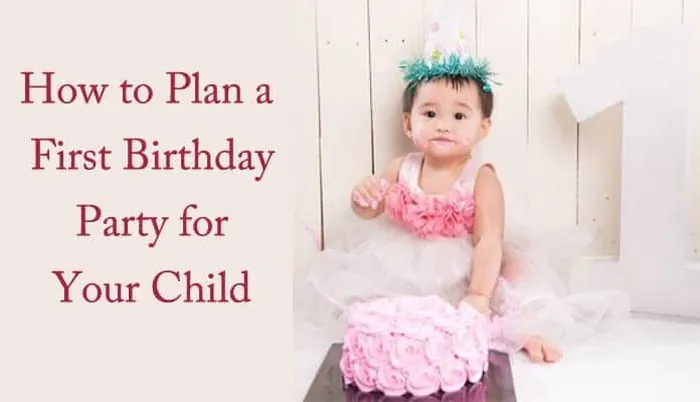
7. Plan the Cake and Smash Cake
The birthday cake is likely to be one of the day’s most photographed details.
You can choose one cake for everyone or have a separate small smash cake for the birthday child.
A separate smash cake can make the cake experience easier because your baby can touch, taste, and explore it without affecting the main cake.
Before ordering, decide:
- Cake flavor
- Size
- Design
- Message
- Whether you want a smash cake
- Any relevant dietary requirements
- Pickup or delivery arrangements
A simple cake can be just as attractive as an elaborate custom design.
Do not plan the cake moment too rigidly
Some babies love cake immediately. Others are cautious, distracted, or simply not interested.
Let your child explore it at their own pace. The point is to capture a fun milestone, not force a particular reaction for a photograph.
8. Plan Food for the Whole Guest List
The menu should match the size and timing of the party.
For a casual gathering, easy-to-serve food is often more practical than a complicated meal that requires constant attention.
Depending on the event, you might serve:
- Sandwiches or wraps
- Pizza
- Pasta
- Fruit
- Vegetables
- Crackers and dips
- Small appetizers
- Cookies or other desserts
- Water
- Tea and coffee
- Other drinks
If babies and toddlers will be eating, provide foods that are appropriate for their age and prepared safely. Parents should be able to decide what is suitable for their own children.
You also do not need ten different dishes. A few dependable choices can reduce preparation, waste, and cleanup.
9. Send Invitations With the Details Guests Need
Once the date, location, and guest list are settled, send invitations.
Digital invitations are convenient for tracking RSVPs, while printed invitations can be kept as a first-birthday memory.
Include:
- Child’s name
- Birthday celebration details
- Date
- Start time
- End time
- Location
- RSVP information
- Theme or dress information if relevant
- Parking instructions if needed
- Information about siblings if applicable
Set an RSVP deadline. You will need an approximate head count before finalizing food and seating.
For a larger party, keep a simple guest list showing who has confirmed, who has not responded, and any practical information you need to remember.
10. Plan Simple Activities for Young Guests
A one-year-old does not need structured entertainment every 20 minutes.
A safe play area may be enough.
Depending on the children’s ages, you could provide:
- Board books
- Soft toys
- Large age-appropriate blocks
- Bubbles
- Simple music
- A supervised play area
- Large sensory activities suitable for the children attending
If older children are coming, give them an activity that is appropriate for their age rather than expecting them to spend the whole party playing with baby toys.
Avoid activities involving small pieces when babies and toddlers are present.
11. Create a Quiet Space for the Baby
This is one of the easiest details to overlook.
A busy party can become tiring for a one-year-old. Set aside a quiet room or corner where the baby can be changed, fed, rested, or comforted.
Keep essential supplies nearby:
- Diapers
- Wipes
- Extra clothes
- Feeding supplies
- Favorite comfort item
- Blanket if normally used
- Any other routine baby supplies
Having this space ready means you do not have to search for supplies once the party becomes busy.
12. Choose a Comfortable Birthday Outfit
A first birthday outfit can be special without being uncomfortable.
Look for clothing that allows your baby to move freely and makes diaper changes reasonably easy.
Bring a backup outfit because cake, food, drinks, and normal baby activities can quickly make the first outfit messy.
If you want photographs of the clean outfit, take some pictures before serving food and cake.
13. Plan the Important Photographs
You do not need to photograph every second of the party.
Instead, make a short list of moments you really want to remember:
- Baby with both parents
- Baby with grandparents
- Full family photograph
- Birthday cake
- Baby seeing the cake
- Candle moment
- Guests celebrating
- Baby opening gifts
- Decorations
- Candid family moments
If possible, ask a trusted friend or relative to handle most of the photographs.
Parents often spend so much time taking pictures that they miss the actual celebration. A few good photographs are more valuable than hundreds of rushed ones.
14. Decide How You Will Handle Gifts
If guests are bringing gifts, set up one designated place for them.
A gift table or corner prevents packages from being scattered throughout the party area.
You can open gifts during the party if the guest list is small. For a large gathering, opening everything may take a significant amount of time, so opening gifts later can be much more relaxed.
If your family already has plenty of toys and clothes, close relatives may appreciate knowing what would genuinely be useful.
15. Decide Whether You Need Party Favors
Party favors are optional, especially for a first birthday.
Babies attending the event may not understand the idea of a favor, and parents may not want another collection of small items.
If you do provide favors, keep them simple and appropriate for the ages of the children attending.
Possible options include:
- Board books
- Bubbles for children old enough to use them safely
- Simple age-appropriate toys
- Stickers for older children
- Small treats for adult guests
Avoid choosing favors simply because they look good in a party photograph.
A Practical Birthday Party Checklist for a 1st Birthday
Use this birthday party checklist for a 1st birthday to keep the planning organized.
Four to six weeks before
- Choose the date
- Decide on the guest list
- Set the budget
- Choose the location
- Decide whether you want a theme
- Book a venue if necessary
- Arrange a photographer if desired
- Start planning the menu
Two to four weeks before
- Send invitations
- Order the birthday cake
- Decide whether to order a smash cake
- Purchase decorations
- Plan activities
- Choose the baby’s birthday outfit
- Arrange seating
- Check what serving supplies you already have
One week before
- Confirm RSVPs
- Finalize food quantities
- Confirm the venue or vendors
- Check decorations
- Buy nonperishable food
- Prepare anything that can be made ahead
- Make a final shopping list
- Plan the party-day schedule
One day before
- Organize the party area
- Prepare decorations
- Collect cake and supplies if appropriate
- Prepare serving items
- Organize drinks
- Put the baby’s extra clothes somewhere accessible
- Charge phones and cameras
- Check the weather if the party is outdoors
On the day
- Keep the baby’s normal meal routine as much as possible
- Finish the final decorations
- Set up food and drinks
- Create a safe play area
- Prepare the cake
- Take important family photographs early
- Keep baby supplies nearby
- Give the baby a break if needed
- Enjoy the celebration
Common First Birthday Planning Mistakes
Making the guest list too large
More guests mean more food, more noise, more cleanup, and more demands on the baby’s attention.
If your child becomes overwhelmed easily, consider keeping the celebration smaller.
Choosing a time that conflicts with naps
A beautiful party cannot compensate for an exhausted one-year-old.
Check your child’s normal schedule before choosing the start time.
Spending too much on decorations
Decorations are temporary. If money is limited, put your budget toward things guests actually need and details that have personal meaning.
Trying to prepare everything on the same day
Cooking, decorating, setting tables, getting the baby dressed, and greeting guests at the same time is difficult.
Prepare as much as possible beforehand.
Forgetting a backup plan
Outdoor parties need a weather backup. Large events need a plan for late guests. Babies need extra clothes and a quiet place.
Think about the most likely problems before the party rather than trying to solve them in the middle of it.
Planning the party for social media
A first birthday does not need to look like a staged photo shoot.
Choose details that work for your family instead of spending money or time trying to recreate a particular online party.
How to Plan a First Birthday Party on a Small Budget
A small budget does not mean the celebration has to feel basic.
Start by choosing your top three priorities.
For example, you might decide that the most important things are:
- Family photographs
- A good birthday cake
- A comfortable meal at home
Once those are covered, simplify everything else.
You can save money by hosting at home, using digital invitations, making a simple cake or dessert yourself if practical, limiting the guest list, using decorations you already own, and skipping party favors.
A homemade birthday banner, family photographs, and a few balloons can create a warm setting without requiring a large decoration budget.
A Simple Party-Day Schedule
A flexible schedule can help you stay organized without making the celebration feel rigid.
For example:
9:00 a.m. — Final setup
10:00 a.m. — Food and drinks arranged
10:30 a.m. — Guests arrive
11:00 a.m. — Family photographs and casual activities
11:30 a.m. — Cake and birthday song
12:00 p.m. — Lunch or additional snacks
12:30 p.m. — Gifts or relaxed family time
1:00 p.m. — Party winds down
The exact schedule should follow your baby’s normal routine. If your child needs a nap earlier, move the celebration accordingly.
Frequently Asked Questions
How early should I start planning a first birthday party?
For a small home party, four to six weeks is usually enough to organize the major details. A larger celebration involving a venue, photographer, caterer, or other services may require more advance planning.
How do you plan a 1st birthday party without spending too much?
Set the total budget first and choose your priorities. Hosting at home, using digital invitations, keeping the guest list small, and limiting decorations and party favors can significantly simplify the event.
Where is the best place to have a first birthday party?
The best location is one that is comfortable and safe for your child. Home is convenient because you have access to baby supplies and a quiet room, while a restaurant or event space may reduce cooking and cleanup.
What is a good time for a first birthday party?
Choose a time when your child is normally awake, fed, and reasonably rested. There is no single ideal time for every one-year-old.
Does a first birthday party need a theme?
No. A theme is optional. You can use a simple color scheme or decorate around one favorite interest instead.
How many guests should attend a first birthday?
There is no fixed number. Consider your child’s personality, the available space, your budget, and how much preparation you can comfortably manage.
Should I have a separate smash cake?
A separate smash cake is optional. It can make the cake experience more child-focused while keeping the main cake presentable for guests.
What activities are suitable for a one-year-old’s birthday?
Simple, supervised activities such as board books, soft toys, age-appropriate blocks, music, and a safe play area are generally more suitable than complicated games.
Do I need party favors for a first birthday?
No. Party favors are completely optional. If you use them, choose simple items that are suitable for the ages of the children attending.
What should I prioritize if I have very little time to plan?
Focus on the guest list, location, food, cake, and baby’s schedule first. Decorations, party favors, and elaborate activities can be simplified or skipped.
Make the Celebration Work for Your Family
Knowing how to plan a first birthday party does not mean you need to plan every detail months in advance or create an elaborate event. The strongest plan is one that gives you enough structure to stay organized while leaving room for your baby’s unpredictable needs.
Start with the practical decisions: guest list, budget, location, date, and time. Then add the details that make the celebration personal—a favorite cake flavor, a simple theme, family photographs, meaningful decorations, or a small gathering of the people your child knows and loves.
If you keep the event comfortable and manageable, you will have more time to enjoy the milestone yourself. The first birthday is worth celebrating, but it does not need to be perfect to become a beautiful family memory.