
Learning how to plan a backyard wedding is mostly about turning an ordinary outdoor space into a comfortable, well-organized place for a wedding. The backyard itself can be simple. What matters is having enough space for guests, a realistic plan for food and seating, dependable restroom access, weather protection, lighting, and a clear schedule.
A backyard wedding can also help you control the guest list and choose where your money goes. Instead of paying primarily for a traditional venue, you can put more of the budget toward food, photography, flowers, entertainment, or details that matter to you.
The best approach is to treat the backyard like a real event venue from the beginning. Measure the space, check local requirements, plan for weather, create a layout, and decide who will handle each job before the wedding day arrives.
Decide What You Want From the Backyard Wedding
Start by deciding what kind of wedding you actually want to host.
A backyard wedding might be:
- A small ceremony followed by dinner
- A casual daytime celebration
- An elegant evening reception
- A family-focused wedding
- A cocktail-style gathering
- A small wedding with a larger party afterward
- A simple ceremony with food served outdoors
Your guest count should be one of the first decisions because it affects almost everything else.
A backyard that feels spacious for 30 people may become uncomfortable with 80 guests, especially once you add tables, chairs, a buffet, a dance area, decorations, and space for vendors.
Check Whether the Property Can Handle a Wedding
Before spending money on decorations or rentals, inspect the property carefully.
Look at:
- Available outdoor space
- Flat areas for tables and chairs
- Indoor areas for emergencies
- Electrical outlets
- Water access
- Restrooms
- Parking
- Entrance and exit routes
- Lighting
- Neighboring properties
- Areas that may become muddy
- Space for caterers and other vendors
Also check whether local rules, neighborhood requirements, homeowner association restrictions, permits, noise rules, or insurance requirements apply to hosting a larger gathering.
Do not assume that because you can have a few friends over, you can automatically host a wedding with dozens of guests, hired vendors, amplified music, or temporary structures.
Create a Realistic Guest List
A backyard wedding works best when the guest count matches the space.
Measure the usable area rather than estimating based on the size of the entire yard. You need room for guests to move comfortably, not just enough space to place chairs.
Think about where you will put:
- Ceremony seating
- Reception tables
- Food and drinks
- Dance floor
- Music equipment
- Cake table
- Gift table
- Couple’s table
- Photography area
- Trash and recycling
- Vendor equipment
If your guest list is larger than your backyard can comfortably handle, you have several choices. You can reduce the guest list, simplify the layout, move some parts of the celebration indoors, or consider another venue.
Comfort should come before squeezing in additional guests.
Set Your Backyard Wedding Budget
A backyard wedding can cost less than a traditional venue, but it is not automatically cheap.
You may need to rent or purchase things a traditional venue would normally provide.
Potential expenses include:
| Expense | Why It May Be Needed |
| Tables and chairs | Guest seating and dining |
| Tent or canopy | Shade or weather protection |
| Lighting | Evening visibility and atmosphere |
| Restroom facilities | Useful when the home cannot accommodate guests |
| Catering equipment | Food preparation and service |
| Decorations | Ceremony and reception styling |
| Sound equipment | Music and speeches |
| Dance floor | Protects grass and creates a defined area |
| Waste removal | Keeps cleanup manageable |
| Generator or power equipment | Useful when electrical capacity is limited |
| Insurance or permits | May be required depending on the event |
The important point is to compare the complete backyard wedding cost with the cost of a traditional venue.
A backyard may save you a venue rental fee while adding rental, catering, staffing, and infrastructure costs.
How to Have a Cheap Wedding Without Making It Feel Cheap
If your goal is to learn how to have a cheap wedding, start by reducing the number of things that need to be paid for rather than trying to make every part of the wedding look luxurious.
Choose a few areas that matter most and keep everything else simple.
Ways to reduce costs include:
- Keep the guest list small
- Choose a daytime wedding
- Use seasonal flowers
- Borrow suitable tables or decorations
- Use simple centerpieces
- Serve a limited menu
- Choose a dessert table instead of an elaborate cake
- Use digital invitations where appropriate
- Skip unnecessary wedding favors
- Use the existing garden or landscaping as decoration
- Ask talented friends or family members to help with appropriate tasks
- Rent only what you genuinely need
For example, if the backyard already has mature trees, flowers, or attractive landscaping, you may not need elaborate floral installations. A few well-placed arrangements can create enough visual interest without decorating every table and corner.
Plan the Backyard Layout Before Renting Anything
Do not order rentals based only on your guest count.
Draw a basic layout of the yard and mark where each major element will go.
Consider creating zones for:
- Ceremony
- Cocktail or mingling area
- Dining
- Food and drinks
- Dancing
- Photography
- Vendor workspace
- Restrooms
- Parking or guest drop-off
Think about how guests will move between these areas.
For example, you do not want guests walking through the catering workspace every time they need to reach the restroom. Likewise, placing a loud speaker directly beside the dinner tables can make conversation difficult.
A simple layout can prevent many problems before the wedding day.
Decide Where the Ceremony Will Happen
The ceremony does not need an elaborate structure to feel meaningful.
You could use:
- A garden area
- A large tree
- A simple arch
- A porch
- A patio
- A poolside area
- A scenic part of the property
Pay attention to the direction of the sun. If guests will be sitting in direct sunlight while looking toward the ceremony, they may be uncomfortable and photos may be affected by harsh light.
For an afternoon wedding, shade can be just as important as decoration.
Also consider where the couple will enter and where the wedding party will wait before the ceremony.
Plan Seating for Comfort
Outdoor seating needs more thought than simply placing chairs in rows.
Consider:
- Elderly guests
- Guests with mobility limitations
- Children
- Shade
- Ground conditions
- Distance from restrooms
- Visibility of the ceremony
- Space between tables
If the yard has uneven ground, make sure chairs and tables are stable.
Avoid placing tables on areas that become muddy after rain unless you have a suitable surface or backup plan.
Make a Weather Backup Plan
Weather is one of the biggest risks of a backyard wedding.
A weather plan should be specific.
Instead of saying, “We’ll move inside if it rains,” determine exactly where everything will go.
Ask yourself:
- Can all guests fit indoors?
- Will the furniture fit?
- Where will the food go?
- Can the ceremony be moved?
- What happens to the dance area?
- Can vendors still work?
- Is there enough lighting?
- What happens if it becomes extremely hot?
- What happens if wind becomes a problem?
Depending on the property, a tent may provide shade and rain protection, but it should not be treated as a complete solution without considering its size, flooring, lighting, power, weather limitations, and setup requirements.
Have a decision deadline for bad weather. Vendors need enough notice to adjust the setup.
Think About Restrooms
This is one of the most overlooked parts of backyard weddings.
A normal home bathroom may be fine for a very small gathering, but it may not be practical for a larger wedding.
Consider:
- Number of guests
- Number of bathrooms available
- Distance from the event area
- Accessibility
- Whether guests will need to enter the house
- Whether temporary restroom facilities are appropriate
If you expect a larger group, discuss restroom options with an experienced event rental provider rather than assuming the household bathrooms will be enough.
Plan Food and Drinks
Your food service should match the space and the style of the wedding.
Possible approaches include:
- Catered buffet
- Plated dinner
- Food stations
- Family-style meal
- Food truck
- Casual barbecue
- Brunch
- Cocktail-style food
A backyard wedding can be a good setting for relaxed food, but serving guests outdoors still requires proper food handling, storage, and temperature control.
Ask your caterer what equipment they need and where they will set up.
Make sure there is enough space for:
- Food preparation
- Serving
- Plates and utensils
- Drinks
- Trash
- Staff movement
Do not place the buffet where guests will block a narrow walkway.
Plan Drinks Carefully
Decide whether you want:
- Full bar
- Beer and wine
- Signature drinks
- Nonalcoholic drinks
- Self-service beverages
- Catered bar service
Keep water readily available, particularly for warm-weather weddings.
If alcohol is being served, check applicable local requirements and consider whether professional bartending or other event services are appropriate.
Think About Power and Sound
Homes are not designed around wedding-sized electrical demands.
Before hiring a DJ, band, caterer, lighting company, or other vendor, find out what power they require.
You may need additional electrical planning for:
- Speakers
- Lighting
- Catering equipment
- Refrigeration
- Music equipment
- Decorative installations
Ask vendors about their power needs before the event.
A professional can also advise whether additional equipment is necessary instead of you trying to connect multiple high-powered devices to household outlets.
Use Lighting to Transform the Space
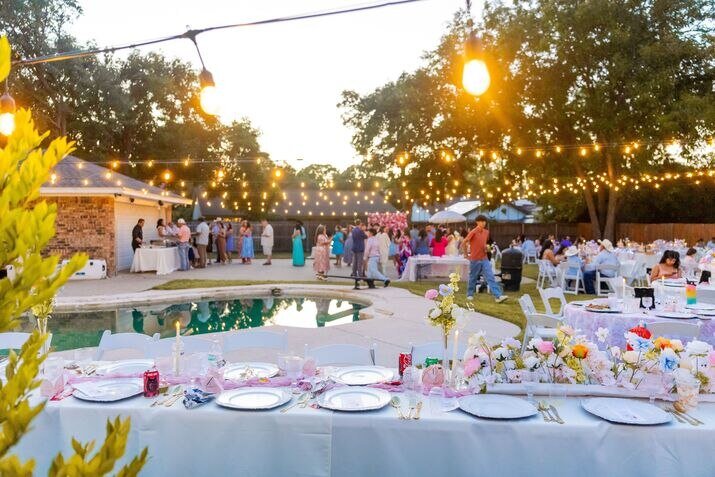
Lighting can make a backyard feel completely different after sunset.
Useful options include:
- String lights
- Lanterns
- Path lighting
- Candles where safely permitted
- Outdoor fixtures
- Decorative table lighting
Prioritize practical visibility first. Guests need to see steps, pathways, seating areas, and restrooms.
Then add decorative lighting for atmosphere.
Keep cables and electrical connections safely positioned and protected from weather.
Choose Decorations That Work With the Yard
A backyard already provides a natural setting, so you do not need to cover every surface with decorations.
Instead, identify a few focal points:
- Ceremony backdrop
- Couple’s table
- Guest tables
- Entrance
- Cake or dessert table
- Photo area
If the yard has attractive greenery, flowers, trees, or architectural features, use them as part of the design.
For example, a large tree can become a natural ceremony backdrop. A patio can become the dining area. A garden path can create a natural entrance.
This approach saves money while making the wedding feel connected to the location.
Wedding Venue Ideas on a Budget
If you like the flexibility of a backyard wedding but do not have a suitable backyard, consider other lower-cost venue possibilities.
Depending on your location and local rules, options may include:
- Community halls
- Small restaurants
- Parks with permitted event areas
- Garden spaces
- Clubhouses
- Cultural centers
- Family-owned properties
- Small inns
- Private event spaces
- Local farms
When looking at wedding venue ideas on a budget, compare what each location includes.
A venue with a slightly higher rental fee may actually be cheaper if it already provides tables, chairs, lighting, parking, kitchen facilities, or cleanup.
Plan Parking and Transportation
Do not let parking become an afterthought.
Ask:
- How many cars can the property accommodate?
- Is street parking permitted?
- Will neighbors be affected?
- Is there a nearby parking area?
- Can guests walk safely from parking?
- Is rideshare pickup practical?
- Does anyone need accessible parking?
If the property cannot handle all the vehicles, arrange an alternative rather than hoping guests will find spaces.
For a larger wedding, a shuttle or designated transportation can also simplify the arrival process.
Tell Your Neighbors
A backyard wedding can affect nearby homes through:
- Guest vehicles
- Music
- Outdoor lighting
- Increased foot traffic
- Vendor deliveries
- Event cleanup
If appropriate, let close neighbors know about the date and expected schedule in advance.
You do not need to provide a detailed wedding plan, but basic communication can prevent surprises and reduce unnecessary tension.
Follow local noise and event regulations regardless of whether neighbors are comfortable with the celebration.
Organize Vendors and Deliveries
Backyard weddings often involve several vendors arriving at different times.
Create a delivery and setup schedule.
Include:
- Vendor name
- Arrival time
- Contact information
- What they are delivering
- Where they should unload
- Where equipment should be placed
- Departure time
Give vendors clear instructions about where to park and where to enter the property.
This is particularly important when the driveway is narrow or several vendors need access at the same time.
How to Organize a Wedding Day
Knowing how to organize a wedding day means making sure someone other than the couple is responsible for coordinating the moving parts.
The couple should not be answering vendor calls while getting ready.
A simple wedding-day schedule might look like this:
| Time | Activity |
| 9:00 AM | Vendor setup begins |
| 11:00 AM | Decorations and rentals checked |
| 12:00 PM | Couple and wedding party get ready |
| 1:30 PM | Final venue check |
| 2:00 PM | Guests arrive |
| 2:30 PM | Ceremony |
| 3:00 PM | Photos and refreshments |
| 4:30 PM | Dinner |
| 6:00 PM | Dancing and celebration |
| 8:00 PM | Cake or dessert |
| 9:00 PM | Final activities |
| 9:30 PM | Event ends and cleanup begins |
Your actual schedule will depend on the ceremony, meal, photography, venue rules, and sunset.
Give Someone Clear Responsibilities
Assign specific jobs to trusted people or professionals.
Someone should know who is responsible for:
- Vendor questions
- Timeline
- Guest issues
- Gifts
- Food service
- Music
- Weather decisions
- Emergency supplies
- Cleanup
The couple should not be the default contact for every problem.
Create a Simple Emergency Kit
Keep a small kit available for minor problems.
It might contain:
- Safety pins
- Basic sewing supplies
- Tissues
- Stain remover
- Bandages
- Pain reliever
- Phone chargers
- Scissors
- Tape
- Extra hair accessories
- Umbrellas
- Bug spray
- Sunscreen
Choose items based on the season and location.
Common Backyard Wedding Mistakes
Underestimating Setup
A backyard does not become a wedding venue simply because the ceremony is taking place there. Tables, chairs, food service, lighting, power, restrooms, and decorations all require preparation.
Inviting Too Many People
A crowded backyard quickly becomes uncomfortable. Keep the guest list appropriate for the actual usable space.
Spending the Savings on Rentals
A backyard may reduce venue costs, but rentals can add up quickly. Price the complete event before assuming it will be cheaper.
Forgetting About Cleanup
Decide who will clean the property, remove trash, return rentals, and restore the yard.
Ignoring Neighbors
Music and parking can affect surrounding homes. Communicate where appropriate and follow local rules.
Having No Weather Alternative
Even if the forecast looks favorable, outdoor events need a backup plan.
Making the Couple the Event Manager
Someone should coordinate vendors and solve problems so the couple can enjoy the wedding.
Backyard Wedding Checklist
- Confirm the property can legally host the event
- Set the guest count
- Create the wedding budget
- Measure the usable space
- Draw the event layout
- Plan ceremony seating
- Arrange tables and chairs
- Plan food and drinks
- Confirm restroom arrangements
- Check electrical needs
- Plan lighting
- Arrange weather protection
- Book necessary rentals
- Confirm vendors
- Plan parking
- Inform neighbors when appropriate
- Create a wedding-day timeline
- Assign responsibilities
- Prepare an emergency kit
- Arrange cleanup
- Confirm the final setup plan
Frequently Asked Questions
Is a backyard wedding cheaper than a traditional wedding?
It can be, especially when the property already has suitable landscaping, furniture, restrooms, and other useful facilities. However, rentals, catering, tents, lighting, power, cleanup, and other services can add significant costs.
How many people can you have at a backyard wedding?
There is no universal number. The practical limit depends on the usable space, local requirements, parking, restroom facilities, seating arrangement, and event layout.
What do you need for a backyard wedding?
Common requirements include seating, tables, food and beverage service, lighting, restrooms, weather protection, power, decorations, music, parking, and a cleanup plan.
How can I have a cheap backyard wedding?
Keep the guest list small, use the property’s natural features as decoration, choose simple food and flowers, borrow or rent selectively, and spend money on the elements that matter most to you.
Do I need a tent for a backyard wedding?
Not always. A tent can provide shade and weather protection, but whether you need one depends on the season, location, guest comfort, and your backup plan.
How do you keep guests comfortable at a backyard wedding?
Provide sufficient seating, shade or weather protection, accessible restrooms, water, suitable lighting, safe walkways, and comfortable temperatures when possible.
Should you hire a caterer for a backyard wedding?
A professional caterer can make food service easier, particularly for larger weddings. For a small gathering, simpler food arrangements may work if they can be handled safely and efficiently.
How do you handle parking at a backyard wedding?
Estimate how many vehicles guests may bring and determine whether the property and nearby streets can accommodate them legally. If parking is limited, consider alternative parking or transportation.
What time should a backyard wedding end?
The appropriate end time depends on local noise rules, the property, neighborhood conditions, and your plans. Check applicable restrictions before scheduling music or other activities late into the evening.
Who should coordinate a backyard wedding?
A wedding planner, day-of coordinator, or trusted person can manage vendors and timing. The couple should ideally avoid being responsible for solving logistical problems during their own celebration.
Make the Backyard Work for You
A backyard wedding does not need to compete with an expensive ballroom or elaborate event space. Its biggest advantage is flexibility: you can create a celebration around a place that already feels personal and familiar.
The key is to plan beyond the decorations. Confirm the guest count, budget, property rules, layout, food, restrooms, power, parking, weather protection, and cleanup before the wedding date gets close.
If you are trying to keep costs down, spend on the things guests genuinely experience comfortable seating, good food, reliable weather protection, practical lighting, and smooth coordination rather than trying to decorate every inch of the yard.
When the practical pieces are handled in advance, the backyard itself can provide much of the atmosphere. You can then focus on the reason everyone gathered there in the first place: celebrating your marriage with the people who matter most.