
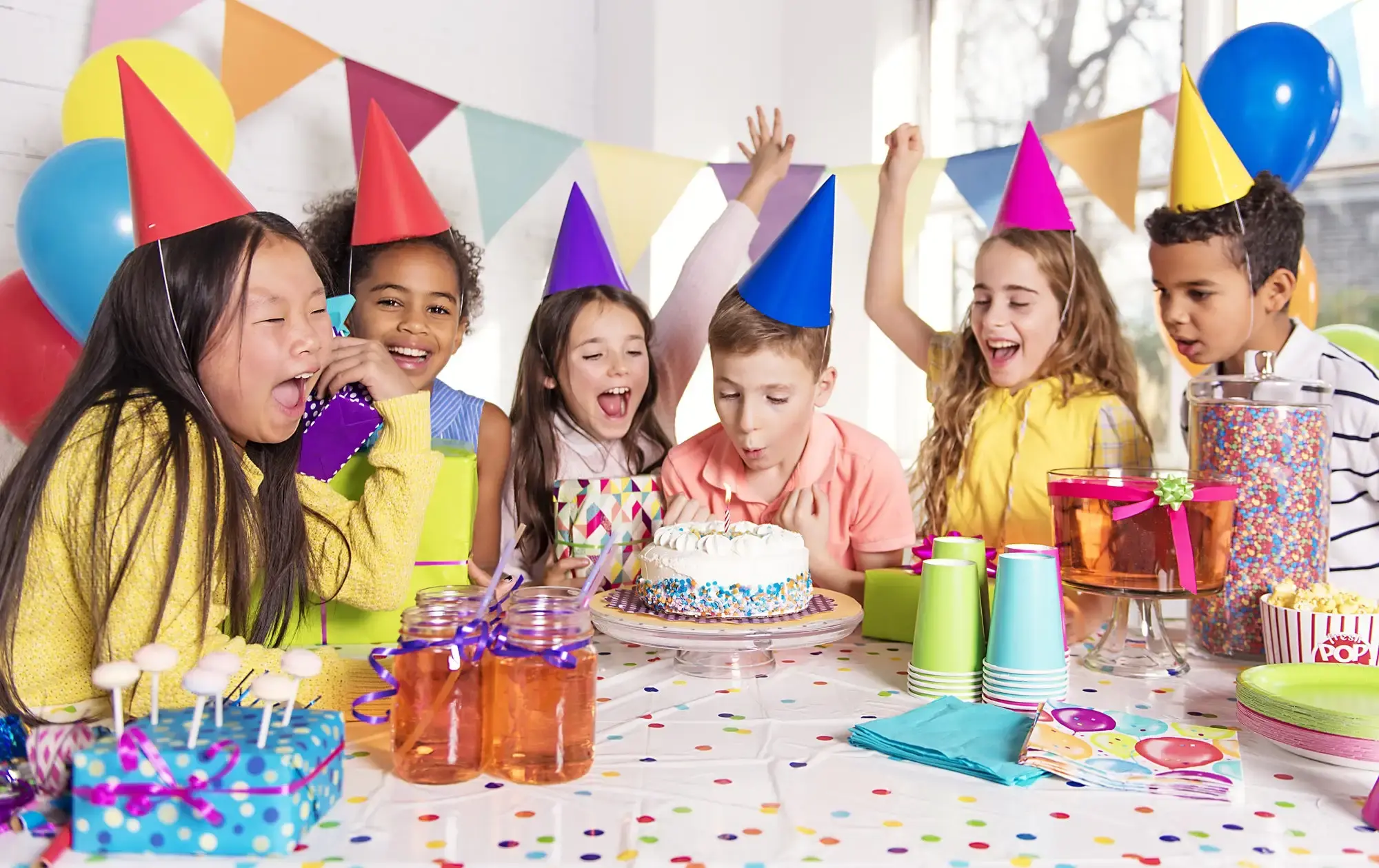
Learning how to organize a kids birthday party is mostly about making a few good decisions in the right order. Start with the child’s age and interests, set a realistic budget, choose the guest list and location, then plan food, activities, decorations, and a simple schedule. You do not need an elaborate theme or expensive entertainment to create a party children enjoy.
The easiest parties to manage have enough structure to keep kids engaged but enough flexibility for them to play, eat, talk, and simply have fun. A two-hour party at home can be just as successful as a larger event at a rented venue if the planning matches the children attending.
1. Start With the Birthday Child
Before buying decorations or choosing a venue, think about what the birthday child actually enjoys.
A five-year-old who loves dinosaurs may want a dinosaur hunt and a cake with dinosaur decorations. A nine-year-old who enjoys crafts might prefer a bracelet-making activity, while a twelve-year-old may be more interested in a movie night, sports activity, or gaming party.
Ask yourself:
- What activities does the child already enjoy?
- Would they rather have a small party or a larger gathering?
- Which friends do they want to invite?
- Do they enjoy organized games or free play?
- Is there anything they definitely do not want?
This first decision affects almost everything else, including the location, activities, food, and decorations.
2. Decide How Big the Party Should Be
There is no perfect number of guests for every child.
A small party with six to eight children can be easier to supervise and gives everyone more opportunity to participate. A larger party can work well when you have enough adult help, space, food, and activities.
Consider the child’s age, the available space, and how many children you can comfortably supervise.
For younger children, a smaller guest list often makes the party easier to manage. Older children may be able to handle a larger group, particularly when the activity is structured.
Do not invite more children simply because a larger party looks more impressive. The right size is the one you can manage comfortably.
3. Set the Budget Before You Shop
One of the easiest ways to overspend is to start buying party supplies before deciding what you can afford.
Divide your budget into the areas that matter most:
| Party area | What to consider |
| Food | Main meal, snacks, drinks |
| Cake | Homemade, bakery, or themed cake |
| Activities | Crafts, games, supplies, entertainment |
| Decorations | Balloons, banner, table decorations |
| Venue | Home, park, community space, or rented venue |
| Invitations | Digital or printed |
| Party favors | Optional take-home items |
| Extra supplies | Plates, cups, napkins, cleanup items |
If money is tight, prioritize food, safety, activities, and comfort before buying decorative extras.
You can make a party look festive with a few balloons, a banner, and a decorated cake without covering the entire room in matching supplies.
4. Choose the Location
The location should match the number and age of the children as well as the type of party you are planning.
Hosting at home
A home party gives you more control and can reduce venue costs. It works particularly well for crafts, movie nights, baking activities, small gatherings, and themed games.
Before deciding, consider whether you have enough space for children to move around and whether you can keep breakable or unsafe items out of reach.
Using a backyard
A backyard can be excellent for active games, water play, scavenger hunts, and larger groups.
Have an indoor backup area if weather could become a problem.
Going to a park
A park provides space for children to run and play without requiring you to decorate a large indoor area. Check local rules about reservations, food, decorations, and activities before planning around a particular space.
Renting a venue
An activity center, bowling alley, indoor play area, or similar venue can reduce the amount of setup and cleanup you need to handle.
The tradeoff is cost and less control over the schedule or menu.
Choose the location based on what will make the party easier to manage, not simply what looks impressive.
5. Pick the Date and Time Carefully
Timing can make a surprisingly big difference.
For younger children, a party scheduled around their normal meal or rest routine can become difficult. A late-afternoon party may work better for some families, while a morning celebration may be easier for younger children.
Before sending invitations, consider:
- School schedules
- Family commitments
- Meal times
- Nap or quiet-time schedules for younger children
- Travel time
- Venue availability
- Weather if the party is outdoors
If you are hosting at home, also consider whether neighbors might be affected by noise or parking.
6. How Long Should a Kids Birthday Party Be?
So, how long should a kids birthday party be? For many children’s parties, around two hours is a practical starting point.
Younger children often do better with a shorter celebration, while older children may enjoy a longer party if there is enough to keep them occupied.
A useful general approach is:
- Toddlers and very young children: around 1 to 1.5 hours
- Ages 4–7: around 1.5 to 2 hours
- Ages 8–12: around 2–3 hours, depending on the activity
These are guidelines rather than strict rules. A simple party with cake and free play may not need three hours, while a bowling, craft, or outdoor activity may naturally take longer.
The bigger the group and the more complicated the activity, the more time you may need for transitions.
7. Choose a Theme Without Making It Complicated
A theme can make planning easier because it gives you a direction for the cake, decorations, activities, and invitations.
Good themes come from the child’s interests:
- Dinosaurs
- Space
- Animals
- Superheroes
- Arts and crafts
- Sports
- Cars
- Princesses
- Science
- Pirates
- Favorite colors
- Favorite books or movies
You do not need to buy every available themed product.
For example, a space party can use dark-colored table decorations, paper stars, a few balloons, and a simple rocket-themed activity. The children do not need matching plates, cups, napkins, banners, costumes, and tablecloths for the theme to work.
8. Plan the Main Activity First
When deciding how to organize a birthday party for a child, choose the main activity before filling the schedule with smaller games.
The main activity should match the children’s ages and the available space.
Ideas include:
- Scavenger hunt
- Treasure hunt
- Craft station
- Cupcake decorating
- Simple science experiments
- Obstacle course
- Outdoor relay games
- Musical games
- Costume activity
- Board games
- Movie and popcorn
- Building challenge
For example, at a dinosaur party, children could search for hidden dinosaur eggs and then use craft materials to decorate them.
The activity gives the party structure without requiring professional entertainment.
9. Plan One or Two Backup Activities
Children do not always follow the plan.
A game may finish faster than expected. A craft may not interest everyone. Rain may prevent an outdoor activity.
Prepare one or two simple backup options that require little setup.
Good backups include:
- Coloring pages
- A guessing game
- Freeze dance
- Simple scavenger hunt
- Building blocks
- A short craft
- Musical chairs
You do not need a full second party plan. A couple of flexible activities are enough to rescue an unexpectedly quiet moment.
10. Create a Simple Party Schedule
A schedule helps you stay organized, but children do not need to know every activity planned for the next two hours.
A two-hour party might look like this:
| Time | Activity |
| 0:00–0:15 | Guests arrive and settle in |
| 0:15–0:45 | Main game or activity |
| 0:45–1:10 | Free play or second activity |
| 1:10–1:30 | Food and drinks |
| 1:30–1:45 | Cake and birthday song |
| 1:45–2:00 | Gifts, favors, and pickup |
You can change the order based on the children and venue.
For younger children, avoid creating a schedule with too many transitions. For older children, you can allow longer periods for a single activity.
11. Send Invitations With the Information Parents Need
A children’s party invitation should make the practical details clear.
Include:
- Child’s name
- Date
- Start and end time
- Location
- Theme, if relevant
- RSVP information
- Whether parents should stay
- Any special clothing or items children need
- Contact information for questions
If the party involves water play, outdoor activities, or messy crafts, tell parents beforehand so children arrive prepared.
A digital invitation can be perfectly adequate for a casual party. Printed invitations may make sense for a more traditional celebration or when the child wants to hand them out to classmates.
12. Plan the Food Around the Children
Children’s party food should be easy to eat and easy to manage.
You do not need a complicated menu.
Depending on the time of day, options might include:
- Pizza
- Sandwiches
- Mini wraps
- Fruit
- Vegetable pieces
- Crackers
- Popcorn for older children
- Simple snack foods
- Cupcakes
- Birthday cake
If you are serving a meal, keep portions manageable. Children often want to return to activities quickly rather than sit through a long meal.
Ask parents about significant food allergies or dietary restrictions when appropriate, and label foods when there is a realistic risk of confusion.
13. Decide Between Cake and Cupcakes
A traditional cake gives you the classic birthday moment, while cupcakes can be easier to serve.
Cupcakes are especially convenient when children are eating at different times because you do not need to cut and distribute a large cake.
If the birthday child wants a particular design, a simple homemade cake can also work. The important part is the birthday moment, not whether the decoration looks professionally made.
If you are using candles, keep a lighter or appropriate candle tool with the cake supplies rather than searching for one at the last minute.
14. Prepare Drinks in Advance
Keep drinks somewhere children can easily access them without repeatedly interrupting the host.
Water should be available throughout the party. Depending on the age group and menu, you can also offer juice, lemonade, or another simple beverage.
Use labeled cups if many children are attending. Writing names on cups can reduce the number of half-finished drinks that end up in the trash.
For younger children, use cups that are practical for their age and avoid placing hot drinks within reach.
15. Keep Decorations Focused
Decorations do not need to take over the room.
Choose two or three areas that will make the biggest visual difference:
- Cake table
- Entrance
- Main activity area
- Dining table
- Photo backdrop
Balloons and a banner can provide a festive look without requiring hours of setup.
If you have a specific theme, use its colors consistently instead of buying every themed decoration available.
This also makes cleanup easier.
16. Prepare the Party Area Before Guests Arrive
Do as much setup as possible before the first guest arrives.
Place activity supplies in separate containers so you can quickly bring them out when needed. Set up the food area, prepare drinks, arrange decorations, and keep cleanup supplies accessible.
If you are hosting at home, put away fragile objects and anything children should not handle.
Create clear areas for:
- Activities
- Food
- Gifts
- Coats or bags
- Bathroom access
- Cleanup
The clearer the room is, the easier it will be to supervise children.
17. Get Another Adult to Help
One adult can quickly become overwhelmed when several children need attention at once.
Ask another responsible adult to help with practical tasks such as:
- Welcoming guests
- Supervising activities
- Serving food
- Taking photographs
- Handling minor spills
- Helping children with crafts
- Watching the gift table
- Communicating with parents
This is particularly important for younger children or larger groups.
You do not need a professional party coordinator. A helpful family member or friend can make a major difference.
18. Plan for Gifts
Decide in advance where gifts will go.
A small table or designated corner keeps presents together and prevents them from being stepped on or mixed with activity supplies.
Whether children open gifts during the party depends on the child’s age, guest list, and family preference.
If the group is large, opening every present individually can take a significant amount of time. A shorter celebration may benefit from opening gifts after guests leave.
If the birthday child opens gifts during the party, remind them to thank each guest. An adult can quietly help manage the gifts so wrapping paper does not spread everywhere.
19. Do Not Overload the Party With Games
One of the most common planning mistakes is trying to fill every minute.
Children need breaks between activities. They may want to talk, play with a new toy, explore the space, or simply sit down for a snack.
Instead of planning six games, choose:
- One main activity
- One backup activity
- Some free-play time
This structure is usually easier to manage and gives children more freedom.
20. Think About Safety and Supervision
Party planning should always include basic safety considerations.
Before guests arrive, check the space for:
- Small objects that could be choking hazards
- Unstable furniture
- Accessible cleaning products
- Open doors or unsafe areas
- Hot food or drinks
- Electrical cords
- Slippery surfaces
- Outdoor hazards
For water activities, trampolines, cooking activities, or anything involving equipment, provide appropriate adult supervision.
Keep emergency contact information for the children attending, especially when parents are leaving children at the party.
21. Prepare a Rain Plan
If your party is outdoors, do not wait until bad weather arrives to decide what to do.
Have an indoor backup that can accommodate the main group or decide in advance whether the party will move to another location.
You can also choose activities that work indoors if the weather changes.
For example, an outdoor scavenger hunt can be replaced with an indoor clue hunt using the same basic concept.
22. Give Guests a Simple Party Favor
Party favors are optional.
If you use them, choose something children can actually enjoy rather than filling bags with random small items.
Good choices include:
- Stickers
- Small craft kits
- Coloring supplies
- A simple puzzle
- A small book
- Homemade treats
- A themed activity item
You do not need to spend a large part of the party budget on favors.
A small, useful item is usually better than a large bag of things that will be forgotten quickly.
23. Make the Party Special With One Personal Detail
The most memorable detail does not have to cost anything.
Create a photo display of the birthday child, ask guests to write birthday messages, prepare a favorite snack, or create a simple memory book.
For a child turning ten, for example, you could ask each guest to write one thing they like about the birthday child. Put the messages into an envelope or small box for the child to keep.
This gives the party something personal beyond decorations and presents.
24. Plan the Cleanup Before the Party Starts
Cleanup becomes much easier when you prepare for it.
Put trash bags somewhere convenient. Keep paper towels and cleaning supplies accessible. Have containers ready for leftovers and a place to put reusable decorations.
Use table coverings if they make sense for the activity and venue.
Do not leave cleanup entirely until the end. During natural breaks, quickly clear empty cups, food wrappers, and used activity supplies.
25. Finish With a Calm Ending
A party does not need to end with another big activity.
As the end approaches, move toward a quieter activity, cake, a final photograph, or party favors.
If parents are picking children up, keep the final few minutes organized so children are easy to account for.
For a two-hour party, avoid starting a major activity in the final ten minutes. It is better to finish something cleanly than to stop halfway through when parents arrive.
How Do You Plan a Birthday Party From Start to Finish?
If you are wondering how do you plan a birthday party, use this order rather than trying to organize everything at once:
4–6 weeks before
- Choose the date
- Decide on the approximate guest list
- Set the budget
- Choose the location
- Decide on the theme
- Book a venue or entertainment if necessary
- Send invitations
2–3 weeks before
- Finalize the main activities
- Plan the menu
- Order the cake if needed
- Buy decorations
- Purchase activity supplies
- Arrange help from other adults
1 week before
- Confirm RSVPs
- Check food and drink quantities
- Prepare decorations
- Assemble party favors
- Create the playlist
- Gather serving supplies
- Prepare a backup activity
1–2 days before
- Buy fresh food
- Prepare anything that can be made ahead
- Check the weather for outdoor parties
- Charge your phone or camera
- Put activity supplies together
- Confirm important details with the venue or helpers
On the day
- Set up before guests arrive
- Keep the schedule flexible
- Supervise activities
- Take photographs
- Keep food and drinks available
- Give the birthday child time to enjoy the party
- Begin cleanup during natural breaks
A Practical Kids’ Birthday Party Checklist
Use this checklist when you need a simple answer to what you need for a birthday party for a child.
- Choose the date and time
- Decide on the guest list
- Set the budget
- Choose the location
- Pick a theme if wanted
- Send invitations
- Plan the main activity
- Prepare one backup activity
- Arrange food
- Arrange drinks
- Order or make the cake
- Buy decorations
- Prepare plates, cups, napkins, and utensils
- Arrange seating
- Prepare candles and a lighter
- Set up the gift area
- Prepare party favors if using them
- Gather cleanup supplies
- Confirm food allergies or special needs
- Arrange another adult to help
- Check the weather if outdoors
- Prepare a backup plan
- Set up before guests arrive
- Take photographs
- Clean up and store leftovers
Common Mistakes Parents Make When Planning a Kids’ Party
Making the guest list too large
More guests mean more food, more supervision, more space, and more opportunities for activities to become chaotic. Keep the group at a size you can realistically manage.
Planning every minute
Children need downtime. Leave room for spontaneous play and conversation.
Spending too much on decorations
A few strong decorative elements can make the room festive without consuming a large portion of the budget.
Choosing activities that are too difficult
An activity should be appropriate for the children’s ages. A craft that requires constant adult help may become frustrating rather than fun.
Forgetting transitions
Moving from an activity to lunch, cake, or gift opening takes time. Build a few extra minutes into your schedule.
Trying to host alone
A second adult can handle small tasks while you supervise the birthday child and the group.
Ignoring the birthday child’s personality
A quiet child may not enjoy a large, noisy party. An energetic child may become bored with a long sit-down meal. Plan around the child rather than an idealized version of a birthday party.
FAQs
How do you organize a birthday party for a child?
Start by choosing the child’s preferred type of celebration, then set a budget, guest list, location, date, and time. After that, plan the food, cake, activities, decorations, and schedule. Prepare as much as possible before the party day.
How long should a kids birthday party be?
Many children’s parties work well at around two hours. Younger children may be happier with a 1- to 1.5-hour celebration, while older children can often enjoy two to three hours when the activities are appropriate.
What should I do first when planning a kids’ birthday party?
Start with the birthday child. Decide what kind of celebration they would enjoy, how many friends they want, and what type of activity suits their age. Then build the budget and logistics around those choices.
How many children should I invite to a birthday party?
There is no universal number. Consider the child’s age, your available space, the number of adults supervising, and the type of activity. A smaller group is often easier for younger children and home parties.
Do kids need a theme for a birthday party?
No. A theme is optional. You can simply use the child’s favorite color, food, hobby, sport, or activity as inspiration.
What food should I serve at a kids’ birthday party?
Choose simple foods that are easy for children to eat and that fit the time of day. Pizza, sandwiches, fruit, snacks, cake, and water are practical choices for many parties. Check for relevant food allergies and dietary restrictions before finalizing the menu.
Should children open gifts during the party?
It depends on the group and family preference. At a small party, opening gifts can be a pleasant activity. At a larger party, it can take a long time, so some families prefer opening gifts after guests leave.
How many games should a kids’ birthday party have?
One main game or activity plus one backup option is often enough. Add free-play time rather than trying to fill every minute with organized games.
How can I organize a kids’ birthday party on a small budget?
Host the party at home or another low-cost location, keep the guest list manageable, make simple decorations, choose inexpensive food, and use homemade or free activities. Spend money on the parts children will actually use rather than unnecessary decorations.
What should I prepare the day before a kids’ birthday party?
Prepare decorations, activity supplies, party favors, serving items, drinks that can be stored safely, and anything else that does not need to be fresh. Confirm the guest list and check the weather if the party is outdoors.
Keep the Plan Simple and Let the Kids Have Fun
The easiest way to organize a successful kids’ birthday party is to make the important decisions early and keep the actual celebration simple. Choose a manageable guest list, set a budget, select a location that suits the children, and plan one activity they will genuinely enjoy.
You do not need to control every minute. Give children enough structure to stay engaged, but leave room for free play, snacks, conversation, and unexpected fun. If the birthday child feels happy and the guests feel comfortable, the party is doing what it is supposed to do.